

Air Ambulance & Air Medical Transport Advisory
Advancing Air Medical Programs. Strengthening Performance.
Fulcrum advises hospitals, health systems, and air medical providers across program development, reimbursement, operations, financial strategy, and strategic partnerships—helping build sustainable air medical transport programs.
Sources: MedPAC, Ambulance Services Payment System, Payment Basics, Oct. 2026, Table 1 (2026 ambulance fee schedule PUF). CMS, Federal IDR Operations Final Rules Implementation Timeline, Aug. 7, 2026. CMS, Supplemental Background on Federal IDR Public Use Files, July 1 – December 31, 2025.
The Air Medical Enterprise
A Healthcare Enterprise That Happens to Fly
An air medical program is a clinical service, an aviation operation and a capital-intensive business at once. Decisions in one part move the economics of all the others.
- Clinical Access
- Aviation Infrastructure
- Operational Performance
- Reimbursement
- Financial Sustainability
- AircraftRotor- or fixed-wing, owned or leased — the largest fixed commitment.
- Hospital PartnersSponsors, referral sources and receiving facilities.
- Clinical CrewsFlight nurses, paramedics and medical direction, staffed around the clock.
- DispatchCommunications, request intake and coordination with transferring facilities.
- PayersCommercial, Medicare, Medicaid and self-pay, each with its own rules.
- PatientsTime-sensitive access, protected from surprise bills where federal law applies.
- OperationsAvailability, maintenance, base productivity and the operator's operational control.
- CapitalStart-up investment, fleet replacement, financing and partner contributions.
Complete Advisory Capabilities
Six Disciplines, One Program View
We advise on the business of air medical transport. Certificated operators keep operational control, and clinical leaders and regulators keep clinical oversight.
Program Development
Feasibility, base strategy, rotor- versus fixed-wing economics, operating model and launch planning.
Program developmentReimbursement & Payer Strategy
Contracting, rate benchmarking, expected-payment modelling, underpayment recovery and denials.
Reimbursement intelligenceNSA & IDR
Eligibility, open negotiation, case selection, evidence and portfolio economics under the No Surprises Act.
No Surprises Act & IDROperations & Workforce
Utilization, base productivity, dispatch workflow, crew economics and operator contract performance.
Operational performanceFinancial Performance
Cost per transport, contribution margin, EBITDA, cash flow, fleet replacement and turnaround.
Financial transformationPartnerships & M&A
Ownership structures, joint ventures, hospital agreements, diligence and post-close integration.
Partnerships & transactions
Market & Geographic Planning
Design Coverage Around Demand, Not Distance
Base location, aircraft type and partner hospitals decide who gets timely access. Around Nashville, switch hypothetical candidate bases on and off to see which rural communities fall inside or outside a straight-line radius.
Middle Tennessee Coverage Scenario — Nashville Region
Census geography · Hypothetical basesThe coverage map needs JavaScript to draw.
Sources: county outlines from U.S. Census Bureau TIGERweb (generalized); town locations from the U.S. Census Bureau 2024 Gazetteer (place internal points); trauma centers from the Tennessee Health Facilities Commission, 2025 Trauma Care Annual Report (adult centers, plotted at city level; Nashville has two Level I and two Level III centers). Candidate bases A–C are hypothetical and do not represent existing or planned bases. Existing air medical bases in the region are not shown. Rings are straight-line radii. Real response time depends on launch time, weather, terrain, airspace, aircraft availability and the operator's decisions.
Layers
Hypothetical Candidate Bases

Program Development & Feasibility
Know the Economics Before the First Launch
Feasibility starts with demand and access, then tests whether volume, payer mix and rates can carry a largely fixed cost base.
Start-Up Investment & Break-Even
Illustrative · Model 1Chart needs JavaScript.
Values come from the illustrative inputs in Model 1 of the Modeling Studio. They are not benchmarks.
Fulcrum Leads
- Strategy, business plan and financial model
- Structure and partner evaluation
- Payer readiness and contracting
Certificated Specialists Lead
- FAA Part 135 operations and aircraft certification
- Clinical licensure and medical direction
- Flight operations and safety decisions
Reimbursement Intelligence
Every Transport Is Two Payments: Base and Miles
Contract terms, Medicare and Medicaid methodology, out-of-network rules and collections each change what a transport is worth. We model all of them claim by claim.
- Billed ChargeThe program's list price for base and mileage.
- Allowed AmountWhat the payer recognizes under contract, fee schedule or out-of-network rules.
- Patient ResponsibilityDeductible, coinsurance or copay inside the allowed amount.
- CollectionsCash actually received from plan and patient.
Medicare 2026 Base + Mileage by Loaded Miles
Sourced · CMS 2026Chart needs JavaScript.
- Rotary wing (A0431 + A0436)
- Fixed wing (A0430 + A0435)
Source: MedPAC, Ambulance Services Payment System, Payment Basics, Oct. 2026 — 2026 conversion factors (rotary $4,489.71, fixed $3,861.62; RVU 1.00) and mileage rates (rotary $29.23, fixed $10.96 per statute mile), from the CMS 2026 ambulance fee schedule public use file. Shown before geographic adjustment (GPCI assumed 1.00 on the 50% labor share). Rural pickup adds 50% to base and mileage. Excludes beneficiary cost sharing split and sequestration.
Reimbursement by Payer Scenario
Illustrative · Model 2Chart needs JavaScript.
- Billed
- Allowed
- Collected
Rates, charges and payer mix are illustrative inputs, not actual CMS, Medicaid or commercial rates. Medicare column uses the sourced 2026 CMS formula at the model's mileage.
| HCPCS | Service | 2026 Medicare Component | Rural Pickup |
|---|---|---|---|
| A0431 | Rotary-wing air transport, base | $4,489.71 conversion factor × RVU 1.00 | +50% |
| A0436 | Rotary-wing air mileage, per statute mile | $29.23 per loaded mile | +50% |
| A0430 | Fixed-wing air transport, base | $3,861.62 conversion factor × RVU 1.00 | +50% |
| A0435 | Fixed-wing air mileage, per statute mile | $10.96 per loaded mile | +50% |
Related services: payer negotiations, payer analytics & market intelligence, claims underpayment recovery and contract implementation.
No Surprises Act & Independent Dispute Resolution
Out-of-Network Air Ambulance, Claim by Claim
Patients are protected from balance bills, and programs can dispute payment through federal IDR when a claim qualifies. Whether a claim qualifies depends on the payer type, the plan, applicable state law and the timeline.
Generally Within Federal NSA / IDR
- Out-of-network air ambulance covered by group health plans and individual coverage subject to the Act
- Self-insured (ERISA) plans, and FEHB carriers
- Air ambulance under the federal process nationwide, unless a self-insured plan has opted into a permitted state process
Outside Federal IDR
- Medicare, Medicaid, CHIP and TRICARE
- Ground ambulance
- In-network claims, which are paid at contracted rates
- Claims failing timing, cooling-off or batching rules
- Out-of-network air ambulance transport is billed to the plan. Fulcrum confirms payer type, plan type and any state-law pathway before the claim enters a dispute workflow.
- The plan must send an initial payment or a notice of denial within 30 calendar days of a clean claim, with the qualifying payment amount (QPA) disclosed. We capture the QPA, remittance codes and plan details. Under the 2026 rule, payers use specified remark codes on items furnished from Jan. 1, 2027.
- Either party may open a 30-business-day negotiation within 30 business days of the initial payment or denial. Under the 2026 rule this moves to the federal portal, with a response due by the 15th business day, once CMS turns on that function. We prepare the negotiation package and settlement range.
- Either party may initiate IDR within 4 business days after negotiation ends. A certified IDR entity is selected and confirms eligibility; the 2026 rule sets a 5-business-day eligibility window once the portal supports it. Cooling-off, batching and state-process rules all apply.
- Each side submits one offer, along with fees, by the deadline. The entity weighs the QPA and the permitted additional information, then selects one offer. Under the 2026 rule a batch may hold up to 50 line items, and a single patient encounter can form one batch.
- The non-prevailing party pays the entity fee, and payment of any amount owed is due within 30 calendar days of the determination. We track the cash, the 90-day cooling-off period and the program-level results.
IDR Economics Waterfall
Hypothetical · Model 3Chart needs JavaScript.
Outcome shares and offers are hypothetical inputs. The $15 administrative fee is sourced (CMS); the certified IDR entity fee defaults to a value within the CMS-set range of $200–$840 for single determinations.
Source: CMS, Supplemental Background on Federal IDR PUFs, July 1 – December 31, 2025 (all dispute types; air ambulance not reported separately in this summary). Batching: CMS, Federal IDR Operations Final Rules Implementation Timeline, Aug. 7, 2026 — applies to disputes with open negotiation periods beginning on or after Nov. 1, 2026.
Operational Performance
Turn Requests Into Completed Transports
Air medical economics turn on how many requests become completed transports, and on what each idle hour costs. We measure the funnel, the bases and the operator contract. We never treat a safety decision as something to optimize.

Executive Operations Dashboard
Illustrative · Model 4Chart needs JavaScript.
All values come from illustrative inputs in Model 4. Acceptance and completion rates reflect pilot, weather and safety decisions made by the certificated operator. They are modelled as given, never as levers.
Hospital Partnerships & Joint Ventures
Own, Contract, or Partner
Each structure trades control for capital and risk. We model the economics, and counsel confirms what is permissible.
| Dimension | Hospital-Owned | Contracted Operator | Joint Venture | Regional Partnership |
|---|---|---|---|---|
| Hospital capital required | ●●● | ●●● | ●●● | ●●● |
| Clinical & brand control | ●●● | ●●● | ●●● | ●●● |
| Financial exposure | ●●● | ●●● | ●●● | ●●● |
| Revenue participation | Full | Full, net of operator fee | Pro rata to ownership | None; support payment |
| Governance | Hospital board | Contract and service levels | JV board, reserved powers | Coverage agreement |
| Aviation certificate | Hospital-held or contracted | Operator | JV or operator | Operator |
Hospital Partnership Comparison — Five-Year Hospital Cash Position
Illustrative · Model 5Chart needs JavaScript.
- Five-year cumulative cash (base case)
- Annual impact if volume falls 20%
Simplified economics from illustrative inputs. They do not establish legal or regulatory feasibility.
Legal and regulatory review required. Hospital support payments, sponsorships, leases, service agreements and JV distributions must reflect fair market value. They cannot depend on the volume or value of referrals, and they must be structured with healthcare counsel under federal and state fraud-and-abuse, licensure and aviation rules. Transfer decisions remain clinical decisions.
Air Medical Workforce
The Cost Base Is Mostly People
Staffing a base around the clock takes pilots, clinical crews, dispatch, maintenance and medical oversight. We model what coverage costs and how to keep people. Staffing levels themselves follow the requirements set by certification, safety and clinical rules.

Workforce Cost Structure
IllustrativeChart needs JavaScript.
Illustrative composition for discussion, not a benchmark. Fulcrum builds the actual structure from a program's payroll, scheduling and vendor data.
Financial Transformation
Follow Each Dollar From Revenue to EBITDA
The bridge breaks each completed transport into its cost layers. Step through the projection years to see how volume and cost growth change the margin.
Program Profitability Bridge — Per Completed Transport
Chart needs JavaScript.
Driven by the illustrative inputs in Model 1. Operating cash flow is shown before taxes, debt service and capital expenditure.
Rural & Critical Access Hospital Integration
Where the Nearest Specialist Is Hours Away by Road
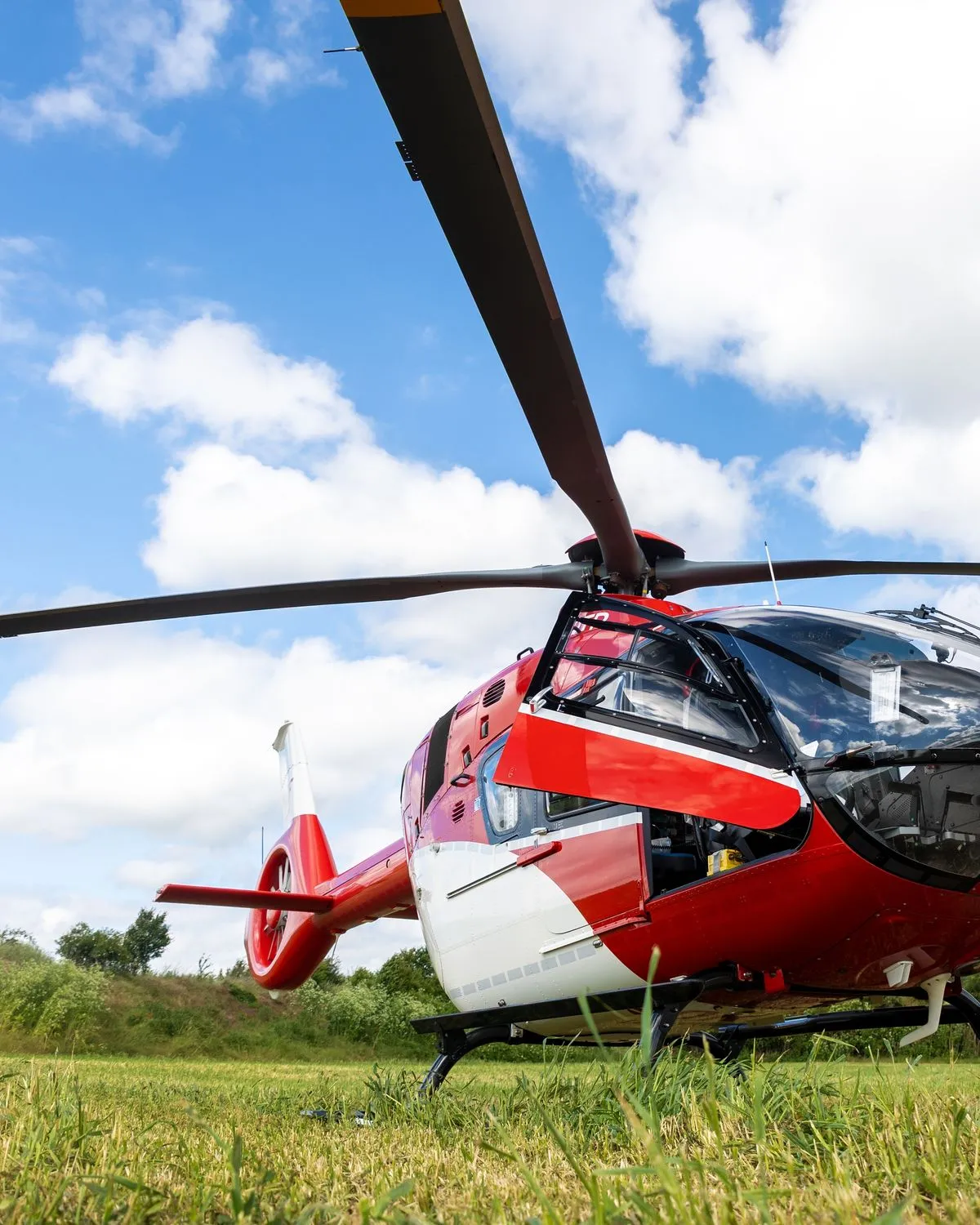
For rural communities and Critical Access Hospitals, air transport links them to trauma, stroke, cardiac and specialty care. Keeping that link depends on economics that work for the hospitals and the operators alike.
Source: MedPAC, Ambulance Services Payment System, Payment Basics, Oct. 2026.
Related: Critical Access Hospital advisory (page in development) and Hospitals & Health Systems.
M&A & Air Medical Investment
Diligence Built for Aircraft, Payers and Disputes
The value of an air medical platform rests on fleet obligations, payer contracts, receivables still in dispute and hospital agreements. Generic diligence often misses these.
Operator & Market Screening
- Base footprint and coverage overlap
- Payer mix and in-network position
- Hospital partner concentration
- Competitive and regulatory exposure
Reimbursement Diligence
- Revenue quality by payer and base
- Contracted versus out-of-network mix
- IDR receivables and historical determinations
- Denials, appeals and underpayments
- Medicare and Medicaid dependence
Valuation Support
- Base-level profitability
- Normalized EBITDA and dispute timing
- Fleet age, replacement and capital exposure
- Working capital and cash conversion
Contract & Obligation Review
- Aircraft lease and financing obligations
- Hospital agreements and change-of-control terms
- Vendor and maintenance contracts
- Workforce retention risk
Close Readiness
- Payer notification and contract assignment
- Enrollment and billing continuity
- Regulatory and certificate coordination with counsel
Integration & Value Creation
- Payer contract harmonization
- IDR program consolidation
- Base and fleet rationalization
- Expansion strategy and synergy tracking
Transaction support: M&A transaction advisory, Black Box Diligence and private equity & investors.
Air Medical Modeling Studio
Five Models, One Set of Assumptions
Each model recalculates as you type, and the charts elsewhere on this page update with it. Every default is an illustrative placeholder, not a benchmark. In an engagement we replace them with your claims, contracts and cost data.
Five-Year Financial Projection
IllustrativeChart needs JavaScript.
- Revenue
- Operating expense
- Cumulative cash (after start-up capital)
| Year | Transports | Revenue | Operating Expense | Operating Cash Flow | Cumulative |
|---|---|---|---|---|---|
| Projection table needs JavaScript. | |||||
Fixed costs: aircraft, insurance, crews and dispatch. Variable costs: maintenance and fuel per flight hour. Admin scales with revenue. Year 0 holds the start-up capital. Taxes, debt service and fleet replacement are excluded.
Payer-Level Revenue
Illustrative| Payer | Billed | Allowed | Patient Resp. | Collected | Annual Revenue |
|---|---|---|---|---|---|
| Payer table needs JavaScript. | |||||
Medicare allowed uses the sourced CMS 2026 formula (conversion factor plus mileage rate, GPCI 1.00, 20% patient coinsurance). For OON, the allowed amount is the plan's initial payment plus in-network-level cost sharing, before any negotiation or IDR. Self-pay shows the billed amount as owed. Every other rate is an illustrative input.
Reimbursement Sensitivity — ±10% Change in Each Driver
IllustrativeChart needs JavaScript.
Portfolio Waterfall
HypotheticalChart needs JavaScript.
Net Recovery vs Selection Rate
Chart needs JavaScript.
Estimated Cash Timing
Chart needs JavaScript.
—
Fee sources: CMS, Federal IDR Operations final rule fact sheet (May 28, 2026) and implementation timeline (Aug. 7, 2026) for the $15 administrative fee. CMS, IDR fee ranges final rule fact sheet (Dec. 18, 2023) for certified IDR entity fee ranges of $200–$840 single and $268–$1,173 batched. The non-prevailing party bears the entity fee. Timing uses 30 business days of open negotiation (≈42 calendar days), 4 business days to initiate, your determination-days input, and payment within 30 calendar days.
Base-Level Contribution vs Request Volume
IllustrativeChart needs JavaScript.
Revenue sensitivity changes request volume only. Acceptance and completion rates stay as entered.
Hospital Economics by Structure
Illustrative| Measure | Hospital-Owned | Contracted | Joint Venture | Regional |
|---|---|---|---|---|
| Comparison table needs JavaScript. | ||||
Cumulative Hospital Cash, Years 0–5
IllustrativeChart needs JavaScript.
- Hospital-owned
- Contracted
- Joint venture
- Regional
The hospital-owned case finances capital over the term, so the full amount is shown as capital at risk. The JV case funds capital through partner equity in proportion to ownership. Downside case: volume 20% below plan. These simplified economics do not establish legal or regulatory feasibility, and every arrangement needs fair-market-value and counsel review.
Questions Leaders Ask
Air Ambulance Consulting FAQs
What does an air ambulance consultant do?
An air ambulance consultant advises on the business of air medical transport: program feasibility, base and fleet economics, payer contracting and reimbursement, No Surprises Act disputes, operating performance, partnerships and transactions. Fulcrum provides strategic, financial and reimbursement advisory and coordinates with certificated operators and clinical, aviation and legal professionals where their expertise is required.
How do hospitals establish air ambulance programs?
Most start with a demand and access assessment, then compare operating structures (hospital-owned, contracted operator, joint venture or regional partnership), model capital and operating economics, select base locations and aircraft type, and build a launch plan. Aircraft certification, flight operations and clinical licensure remain with certificated operators and the relevant regulators.
How are air ambulance services reimbursed?
Payment is typically built from a base rate per transport plus a per-mile rate for loaded miles. Medicare pays under the ambulance fee schedule using HCPCS A0430 and A0431 for fixed-wing and rotary-wing transport and A0435 and A0436 for mileage, with a 50 percent rural adjustment. Commercial plans pay contracted or out-of-network rates, and Medicaid rates are set by each state.
Does the No Surprises Act apply to air ambulance services?
Yes, for out-of-network air ambulance services covered by group health plans and individual health insurance coverage subject to the Act. It limits patient cost sharing to in-network levels and prohibits balance billing in those cases. It does not apply to Medicare, Medicaid, CHIP or TRICARE, and it does not cover ground ambulance.
How does federal IDR work for eligible air ambulance claims?
After the plan's initial payment or denial, either party may open a 30-business-day negotiation. If it fails, either party may initiate federal IDR. A certified IDR entity confirms eligibility, each side submits an offer, and the entity selects one. Eligibility must be confirmed claim by claim, and no outcome is guaranteed.
What determines air ambulance program profitability?
Profitability depends on completed transport volume relative to a largely fixed cost base (aircraft, 24/7 crews, bases and maintenance), payer mix, contracted and out-of-network rates, collections, and the cost and timing of payment disputes.
Should a hospital own, contract, or partner with an air ambulance operator?
It depends on the hospital's capital appetite, desired clinical and brand control, volume certainty and risk tolerance. Ownership offers control with full financial exposure; contracted and partnership models shift capital and aviation risk to the operator. Every structure requires fair-market-value terms and legal review.
How do air medical programs evaluate expansion opportunities?
By testing new bases or aircraft against transfer and scene demand, existing coverage, competing providers, weather and terrain, payer mix and the incremental fixed cost each base adds, then modelling break-even volume before committing capital.

Today's Challenges. Tomorrow's Solutions.
Build a More Sustainable Air Medical Program.
From program feasibility and operations to reimbursement, payer disputes, and strategic partnerships, Fulcrum helps air medical organizations navigate complex financial and operational decisions.
Speak With Our Air Medical Advisors