
National Payer Enrollment Expertise. Strategic Network Access. Faster Time to Revenue.
Whether you're launching a new practice, opening a new facility, establishing a new Tax ID, expanding into new markets, or acquiring another provider organization, Fulcrum Health Partners helps healthcare organizations successfully enroll with commercial health plans, Medicare, Medicare Advantage organizations, and Medicaid programs nationwide.
We combine national payer expertise, strategic enrollment planning, and managed care contracting experience to accelerate the path from enrollment to reimbursement.
National Experience That Creates Better Outcomes.
Fulcrum Health Partners has supported the establishment of more than 5,000 payer contracts across virtually every physician specialty, provider type, and site of care.
Our experts have successfully guided payer enrollment initiatives involving:
- Every major national commercial health plan
- Regional commercial insurers
- Blue Cross Blue Shield organizations
- Medicare
- Medicare Advantage organizations
- State Medicaid programs, all 50 states
- Managed Medicaid organizations
- Third-party administrators
- Employer-sponsored health plans
Because payer enrollment is one of our core advisory services, we understand not only the published requirements — but also how health plans actually process applications, review documentation, coordinate contracting, and prepare providers for network participation. That experience helps clients avoid unnecessary delays, anticipate payer requirements, and move toward participation with greater efficiency.
Our Payer Enrollment Services.
Enrollment is the first step. Contracting is the next. Fulcrum owns the strategy and the operational work across both.
New Tax ID (TIN) Enrollment
Establishing participation under newly formed legal entities — the foundation for a new group, platform, or acquired practice.
New Practice Enrollment
Supporting newly established physician groups, ASCs, hospitals, behavioral health, infusion providers, imaging centers, specialty pharmacies, and more.
New Location Enrollment
Expanding existing payer participation to additional practice locations, clinics, campuses, or facilities.
Group vs. Individual Enrollment Strategy
Determining the optimal enrollment structure while coordinating provider participation, billing relationships, and organizational setup.
Payer Application Management
End-to-end ownership of the application lifecycle.
- Application preparation & documentation
- Submission & status monitoring
- Issue resolution & escalations
- Portal navigation guidance
Payer Communication
Coordinating directly with the teams that move applications forward.
- Network Management & Provider Relations
- Contracting & Enrollment teams
- Implementation teams
- Regional representatives
Network Participation Strategy
Helping organizations determine which plans to prioritize, evaluate network and closed-panel opportunities, and build market-specific expansion and long-term contracting goals.
Managed Care Contract Negotiation
Once enrollment reaches the contracting phase, Fulcrum negotiates reimbursement rates, contract language, operational provisions, and strategic terms.
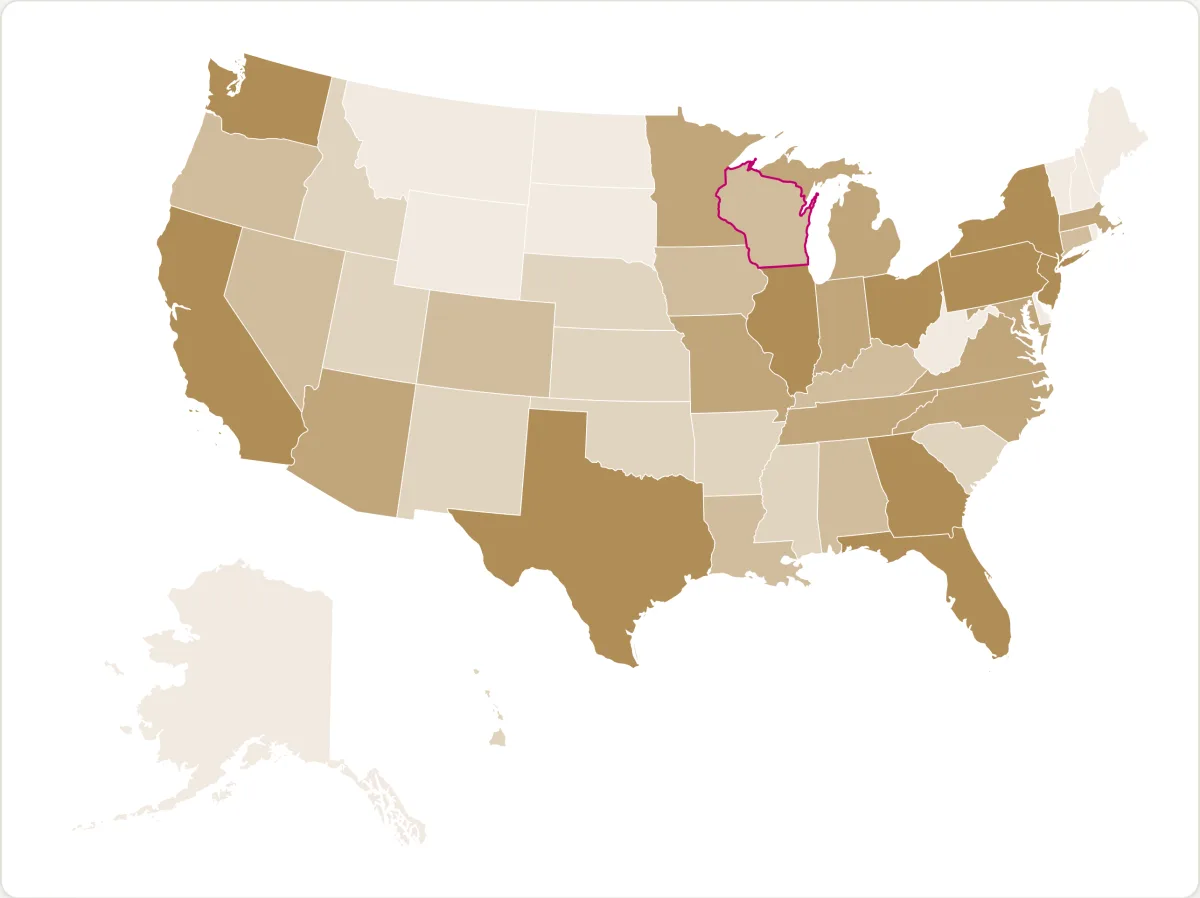 * Commercial covered lives by state · illustrative
Enrollment Starts With Knowing Who Covers the Lives.
Enrolling with every payer is not a strategy. The plans worth pursuing are the ones that actually cover patients in the markets you serve — and that mix looks different in every state and every channel.
Fulcrum's covered lives intelligence shows which payers hold share by state across commercial, Medicare Advantage, managed Medicaid, and exchange, so enrollment effort goes where the volume actually is.
- Prioritize the plans that hold real share in your markets
- Sequence multi-state and multi-location rollouts by payer concentration
- Enter contracting knowing each payer's local position
Why Fulcrum Is Different.
Most enrollment vendors submit paperwork. Fulcrum brings reimbursement strategy, payer fluency, and the contracting expertise that determines what participation is actually worth.
Paperwork in, Paperwork Out
- Paperwork focused
- Limited reimbursement knowledge
- Minimal contracting expertise
- Reactive follow-up
- Little strategic guidance
- Limited payer relationships
- No negotiation capabilities
Strategy Through Reimbursement
- National reimbursement experts
- More than 5,000 payer contracts supported
- Commercial, Medicare, Medicare Advantage & Medicaid nationwide
- Strategic enrollment planning
- Managed care contracting specialists
- Closed-network navigation expertise
- Executive-level payer relationships
- National market intelligence
- Contract negotiation capabilities
- Long-term reimbursement advisors
We Understand How Health Plans Actually Work.
Published requirements are only the surface. Fulcrum's operational knowledge of payer processes helps organizations move efficiently and avoid the delays that commonly stall provider enrollment.
Experience That Helps Keep Projects Moving.
Fulcrum maintains long-standing professional relationships throughout the healthcare payer industry. Every payer follows its own regulatory requirements and internal review process — our experience helps clients navigate them.
Fulcrum does not guarantee payer approvals or network acceptance, and our relationships are professional and process-oriented — never a substitute for each payer's own regulatory requirements and review.
A Strategic Enrollment Timeline.
Ten phases from first assessment to ongoing relationship management — with contracting built in, not bolted on. Hover or tab through each phase.
Strategic Assessment
Goals, footprint, payer priorities, and current state.
Enrollment Planning
Structure, entities, TINs, and sequencing.
Documentation Collection
Gather and organize everything each payer expects.
Application Submission
Prepared, accurate, and submitted to each payer.
Payer Review
Monitoring, status tracking, and issue resolution.
Contract Negotiation
Rates, language, and strategic terms — the contracting bridge.
Agreement Execution
Finalized, signed, and documented participation.
System Configuration
Loading and validating participation and rates.
Go-Live
Billing participating rates with confidence.
Relationship Management
Ongoing maintenance, renewals, and expansion.
Phases 06–07 are where enrollment becomes reimbursement — Fulcrum's managed care contracting expertise carries the project through.
Common Enrollment Challenges.
The situations that most often stall provider enrollment — and where experienced ownership makes the difference.
Industries We Serve.
Payer Enrollment, Answered.
Does Fulcrum provide credentialing services?
No. Fulcrum Health Partners does not provide provider credentialing or primary source verification services. We do not perform:
- Primary Source Verification (PSV)
- Provider credentialing
- Provider recredentialing
- Hospital privileging
- CAQH profile creation or management
- PECOS enrollment
- PTAN enrollment
- DEA registration
- State licensure applications
- Board certification verification
- NPDB queries
- Malpractice verification
- Background investigations
- Credential file management
Instead, Fulcrum specializes in the strategic business side of payer enrollment and managed care contracting. We frequently work alongside credentialing departments, medical staff offices, revenue cycle teams, and third-party credentialing vendors to help organizations establish payer participation and position for long-term reimbursement success. Credentialing and payer enrollment often occur simultaneously, but they are separate processes requiring different expertise.
How long does payer enrollment usually take?
Timelines vary by payer, product, state, and provider type — commonly ranging from roughly 60 to 180 days once complete documentation is submitted. Commercial plans, Medicare, and Medicaid each follow their own review processes, and closed networks or contracting steps can extend the timeline. Fulcrum helps organizations plan realistically and keep applications moving.
Should enrollment begin before opening?
Generally yes. Because payer review can take several months, beginning enrollment planning well before a practice, facility, or location opens helps reduce the gap between go-live and the ability to bill participating rates.
Can enrollment begin before credentialing finishes?
Credentialing and payer enrollment often occur simultaneously, but they are distinct processes. Certain enrollment planning and preparation activities can begin in parallel; however, payers typically require credentialing to be complete before finalizing participation. Fulcrum coordinates enrollment activities alongside your credentialing team or vendor.
Can Fulcrum help with closed networks?
Yes. Fulcrum helps organizations understand closed-network and panel-limitation dynamics, evaluate participation opportunities, and develop a strategy for pursuing access. We cannot guarantee network approval, but our national experience helps clients navigate these situations more effectively.
What documents are usually required?
Requirements vary by payer but commonly include entity and ownership information, Tax ID and NPI details, licensure and practice information, provider rosters, W-9s, and payer-specific application forms and attestations. Fulcrum helps identify, organize, and prepare the documentation each payer expects.
When should contract negotiations begin?
Contracting considerations should be part of enrollment planning from the start. As enrollment reaches the contracting phase, Fulcrum can assist in negotiating reimbursement rates, contract language, and operational and strategic terms — the bridge into our managed care contracting service.
Can existing contracts transfer after an acquisition?
It depends on the transaction structure and each payer's rules for assignment and change of control. Some agreements assign; others require new enrollment and contracting. Fulcrum helps assess how each payer treats the transaction and plans the enrollment and contracting work accordingly.
What delays enrollment most often?
Common causes include incomplete or inconsistent documentation, incorrect entity or product mapping, portal and submission issues, closed networks and panel limitations, ownership changes, multi-state complexity, and delayed payer responses. Fulcrum's process is designed to anticipate and resolve these before they stall a project.
Can enrollment occur under multiple Tax IDs?
Yes. Organizations frequently enroll under multiple Tax IDs across entities, locations, or acquired practices. Fulcrum helps determine the optimal enrollment structure and coordinates participation, billing relationships, and organizational setup across TINs.
How early should organizations begin planning?
As early as possible — ideally during the business planning phase for a new practice, facility, location, or acquisition. Early planning gives payer review the runway it needs and allows enrollment and contracting to be sequenced strategically.
Which payers can Fulcrum help us enroll with?
Fulcrum supports enrollment across major national commercial health plans, regional insurers, Blue Cross Blue Shield organizations, Medicare, Medicare Advantage organizations, state Medicaid programs across all 50 states, managed Medicaid organizations, third-party administrators, and employer-sponsored plans.
Do you support multi-state and multi-location expansion?
Yes. Fulcrum supports organizations expanding across states, adding locations, and standardizing enrollment across a growing platform, accounting for state-specific requirements and payer variations.
Do you work with private equity platforms and MSOs?
Yes. Fulcrum regularly supports private equity portfolio companies, management services organizations, and de novo platforms with new Tax ID enrollment, acquisition integration, and network participation strategy.
How does enrollment connect to managed care contracting?
Enrollment is the first step; contracting is where reimbursement is determined. Because Fulcrum provides both, we plan enrollment with the contracting outcome in mind and transition seamlessly into rate and term negotiation.
Can you help resolve applications that are already stuck?
Yes. Fulcrum is frequently engaged to diagnose and unstick delayed or rejected applications — identifying the appropriate payer contacts, resolving documentation issues, and navigating payer-specific workflows to move the project forward.
Ready to Become Participating With More Health Plans?
Whether you're launching a new organization, opening a new location, acquiring another practice, or expanding into new markets, Fulcrum provides the strategic expertise to navigate payer enrollment efficiently — and lay the foundation for long-term reimbursement success.